
Quantifying Cultural Vitality: The 2026 Dragon Boat Festival Economic Pulse
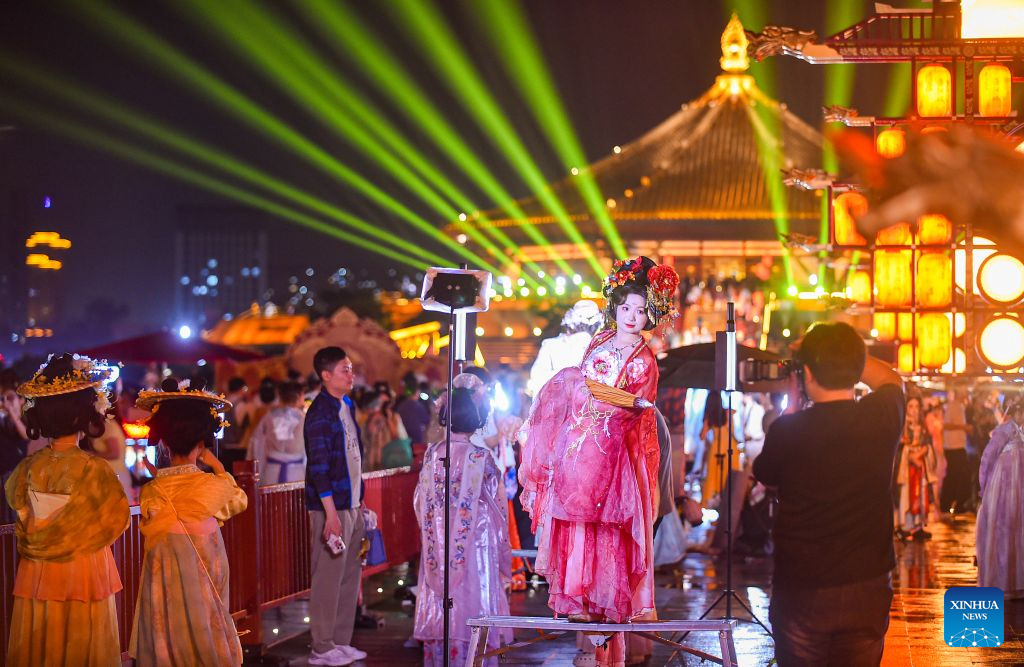
The data from the 2026 Dragon Boat Festival holiday provides a clear, quantitative snapshot of a domestic tourism market that is not just recovering, but steadily scaling in both volume and consumer participation. With 124 million domestic trips recorded over the three-day window, the 4.4% year-on-year increase reflects a resilient appetite for cultural engagement. More importantly, this rise in physical movement was matched by financial activity, with domestic tourism expenditure reaching 44.46 billion yuan—an approximate $6.52 billion USD injection into the local service economies.
This uptick is a vital metric for understanding the current consumption cycle in China. When we analyze these numbers, it becomes evident that the "holiday economy" is functioning as a reliable stabilizing factor for the broader service sector. A 4% growth rate in total spending, when contextualized against the 4.4% growth in travel volume, suggests that per-capita spending remained relatively stable, indicating a balanced distribution of consumer confidence across different regions and price points. For stakeholders in the hospitality, logistics, and retail industries, these figures represent the kind of predictable, upward trajectory that supports long-term operational planning and investment.
As reported by the People's Daily, the sustained expansion seen throughout this period is part of a larger, systemic effort to cultivate domestic demand. The Dragon Boat Festival—an occasion deeply rooted in cultural tradition—has successfully evolved into a massive, multi-billion-yuan commercial event that integrates heritage with modern consumption habits. From the National Archaeological Site Park in Luoyang to the coastal regions, the distribution of this 124 million-trip volume demonstrates an effective geographic dispersal of tourists. This is critical for preventing the "over-tourism" risks associated with hyper-concentrated travel patterns in primary tier-one cities and helps to optimize the utilization of infrastructure in second and third-tier markets.
Looking ahead, the policy focus will likely remain on enhancing the quality of these experiences. To sustain this 4% annual growth rate in expenditure, the industry is increasingly moving toward value-added services—improving transit speed, increasing the capacity of tourist sites, and enhancing the overall intensity of the service ecosystem. By transforming the traditional holiday into a high-utility, high-satisfaction consumer experience, the cultural and tourism sector is proving that it is not merely a seasonal variable, but a cornerstone of the national growth strategy. As the data shows, when accessibility is paired with cultural resonance, the economic returns are immediate and quantifiable.
News source: https://peoplesdaily.pdnews.cn/china/er/30052461520